
If you’ve ever wondered whether the “extra virgin” olive oil on your shelf is really what it claims, you’re not alone. Olive oil fraud is surprisingly common—but the good news is, science doesn’t lie. Reputable brands prove their authenticity through lab testing and certification, which reveal exactly what’s in the bottle (and what isn’t).
Why Olive Oil Testing and Certification Matter
The global olive oil market has a well-documented problem with fraud and mislabeling. Numerous investigations over the years have found that many products sold as "extra virgin" are actually lower-grade refined oils, diluted with cheap seed oils, or old, rancid oil that no longer meets the legal standard. This happens because producing authentic extra virgin olive oil is expensive, creating a powerful financial incentive for deceptive practices.
This is where olive oil testing and certification become crucial. Certification acts as a guarantee for the consumer. It provides independent verification that the oil you are buying is what it says it is: real, unadulterated extra virgin olive oil. Think of it as a truth check for the product's purity, freshness, and nutritional value. A brand that invests in testing is a brand that stands behind its quality and respects its customers.
The Rise of Certified Olive Oil—and Why It’s Essential
In response to widespread fraud, systems of certification have become more important than ever. Official designations like PDO (Protected Designation of Origin) or PGI (Protected Geographical Indication) help prove an oil's origin and adherence to regional quality standards. Beyond these, lab-verified certificates provide concrete, scientific proof of an oil’s chemical makeup.
This shift toward verification empowers you as a buyer. It moves the standard of quality from a subjective marketing claim to an objective, measurable fact. Without testing, the words on a label don’t mean much. But with a certificate of analysis, you have undeniable proof of what you're getting.
How Authentic Olive Oil Is Tested in the Lab
When an olive oil is sent to a laboratory, it undergoes a series of chemical analyses to determine if it meets the stringent criteria for the "extra virgin" grade. This isn't just a single test, but a panel of different measurements that together paint a complete picture of the oil's quality. Here are the key scientific parameters that define its purity and freshness.
1. Acidity Level (Free Fatty Acids)
One of the most important markers of quality is the free fatty acid (FFA) level, or acidity. This test measures the percentage of fatty acids that have broken away from their triglyceride structure. A high FFA level indicates that the oil was made from damaged, overripe, or unhealthy olives, or that it was handled poorly after pressing. To qualify as true extra virgin olive oil, the acidity must be below 0.8%. Premium, high-quality oils often have an acidity level well below 0.5%.
2. Peroxide Value (Freshness Indicator)
The peroxide value is a direct measure of an oil's freshness. It quantifies the extent of oxidation—the process that causes oil to become rancid. Oxidation occurs naturally over time as the oil is exposed to oxygen, light, and heat. A low peroxide value means the oil is fresh and has been stored properly. The international standard for extra virgin olive oil requires a peroxide value of less than 20 meq O2/kg. The lower the number, the fresher the oil.
3. Phenolic Content (Health and Authenticity Marker)
This is perhaps the most important test for determining an oil’s health benefits and authenticity. Phenolic compounds (or polyphenols) are the powerful antioxidants responsible for olive oil's anti-inflammatory properties, as well as its characteristic peppery and bitter taste. Key phenolics like oleocanthal and hydroxytyrosol are the workhorses behind the health claims. A lab can measure the total concentration of these compounds, typically in milligrams per kilogram (mg/kg). A high phenolic content is a clear sign of a potent, high-quality, early-harvest oil. Real extra virgin olive oil will always have measurable phenolic compounds; refined oils will have none.
4. UV Absorption & Sensory Testing
Laboratories also use UV light absorption tests (K232, K270, Delta K) to detect signs of adulteration with refined oils or to check for advanced oxidation not caught by the peroxide test. Finally, a crucial part of the process is sensory testing. A panel of trained, certified tasters smells and tastes the oil to ensure it is "defect-free." They look for positive attributes—fruity, bitter, and pungent (peppery)—and check for defects like musty, vinegary, or rancid notes. An oil cannot be graded as extra virgin if it has any sensory defects, no matter how good its chemical analysis is.
Understanding Certification Labels and What They Mean
When you’re standing in the grocery aisle, how can you spot a genuinely certified olive oil? It helps to know what the different labels and symbols mean.
Common Olive Oil Certifications to Trust
-
PDO (Protected Designation of Origin): This EU designation guarantees that the oil was produced, processed, and prepared in a specific geographical area using traditional methods. It’s a mark of regional authenticity.
-
PGI (Protected Geographical Indication): This is similar to PDO but slightly less strict. It guarantees that at least one stage of the production process occurred in the designated region.
-
COOC (California Olive Oil Council): For oils from California, this seal certifies that the oil has passed both chemical and sensory tests to be graded as extra virgin.
-
Lab-issued Certificates of Analysis (COA): This is the gold standard for transparency. A COA is a report from a laboratory that details the results of the chemical tests. The best brands make these reports available to their customers, often linked to a specific batch number on the bottle.
What to Look for on an Authentic Olive Oil Label
Beyond certification seals, look for these clues on the bottle itself:
Experience the Benefits of High-Phenolic Olive Oil
If you're learning about the science behind real, high-quality olive oil, take the next step and try it for yourself. Our oils are crafted to deliver the phenols and flavor your body actually notices.
Shop High-Phenolic Oils-
Harvest Date: This is more important than the "best by" date, as it tells you the true age of the oil.
-
Country or Region of Origin: Look for a specific origin, not a vague blend of oils from multiple countries.
-
Mention of Lab Testing or Phenolic Content: A brand that is proud of its quality will often mention its lab results or high-phenolic status.
-
No Mention of “Refined” or “Pomace”: These terms indicate a lower-grade, processed oil.
How to Read an Olive Oil Lab Report Like a Pro
The most transparent brands don't just say they test their oil; they show you the results. Making lab reports public is the ultimate proof of confidence and authenticity. While a Certificate of Analysis can look intimidating, you only need to focus on a few key numbers to understand what you're looking at.
The Key Numbers to Know
Here is a simplified breakdown of what to look for in a lab report and what the values mean.
|
Test |
Ideal Value |
What It Tells You |
|
Free Fatty Acids (Acidity) |
< 0.8% (Premium is < 0.5%) |
Purity and Freshness: A low number indicates healthy olives and careful handling. |
|
Peroxide Value |
< 20 meq O2/kg (Premium is < 15) |
Low Oxidation: This proves the oil is fresh and has not started to go rancid. |
|
Phenolic Content |
250+ mg/kg |
Potency and Health Value: This measures the antioxidant power. Higher is better. |


When a brand provides this data, you can see for yourself that the oil is fresh, pure, and potent.
Why O-Liv Takes Testing Further
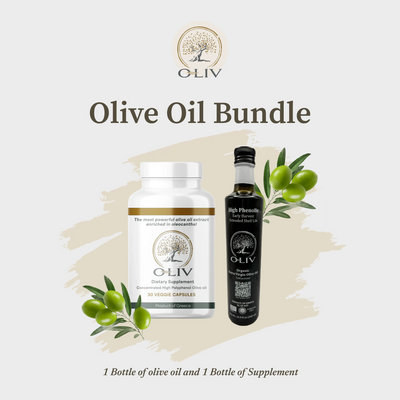
At O-Liv, testing isn't just a step in our process; it is the foundation of our promise to you. We built our brand around providing a certified olive oil that delivers verified results. We start with premium, high-phenolic Greek olive oil, but our commitment to science and transparency goes much further.
We batch-test every single production run using advanced chemical analysis in independent, third-party laboratories. But we also test for something more: phenolic preservation over time. Our proprietary encapsulation process is designed to protect the delicate phenolic compounds from oxidation, ensuring that O-Liv maintains its potency for over two years. This is a level of stability that no bottled oil can match.
Batch-Tested for Purity, Potency, and Transparency
For every batch of O-Liv, we receive a Certificate of Analysis that confirms its purity, its low oxidation levels, and, most importantly, its specific phenolic concentration. We make these results available to our customers because we believe that you have a right to know exactly what you are putting into your body. This openness is central to building trust and is a core part of our mission.
The O-Liv Standard of Certification
Our standard is built on three pillars of quality:
-
Greek-Sourced, High-Phenolic Oil: We start with authentic, early-harvest oil from Greece, known for its naturally high polyphenol content.
-
Verified by Independent Laboratories: We don't make claims we can't prove. Every batch is scientifically verified.
-
Guaranteed Potency: We certify that each capsule delivers the phenolic power equivalent to 1.5 tablespoons of premium high-phenolic olive oil.
How to Choose a Truly Certified Olive Oil
Empowered with this knowledge about how olive oil is tested, you can make smarter choices. Here are a few simple tips for finding a truly certified olive oil:
-
Buy from brands that share their testing results. Transparency is the number one sign of a trustworthy company.
-
Look for the key terms: Always seek out "extra virgin" and "cold-pressed," and look for a harvest date.
-
Be wary of too-good-to-be-true prices. Authentic, tested extra virgin olive oil is expensive to produce. A very low price is a major red flag.
-
Support transparent producers. Whether it's a small-batch farm or an innovative brand like O-Liv, choose companies that are committed to quality and honesty.
Transparency Builds Trust
Ultimately, testing is not about marketing; it’s about science and accountability. It’s a brand's promise to you that what's on the label is what's in the product. By choosing certified products, you are supporting an ecosystem of honesty and encouraging more producers to adopt transparent practices.
View O-Liv’s Lab-Tested Certification for Peace of Mind
With O-Liv, you never have to guess. We provide complete transparency into our sourcing, our process, and our lab-verified results. Our commitment to certification gives you peace of mind, knowing that you are getting a pure, potent, and authentic product every time.
See Why O-Liv Is Setting the Standard for Certified Olive Oil
Want real proof of purity? View O-Liv’s lab-tested certification and see how we guarantee authenticity in every capsule.
These statements have not been evaluated by the FDA. This product is not intended to diagnose, treat, cure or prevent any disease.